Disclosure: This post contains affiliate links. As an Amazon Associate, Sparkleland Kids earns from qualifying purchases, at no extra cost to you. We only recommend products we think families will genuinely use.
Every parent wants a gift that is both loved and useful, but nobody wants to hand over something that feels like a worksheet in a box. The trick is finding toys and games where learning happens by accident, while children are busy having fun.
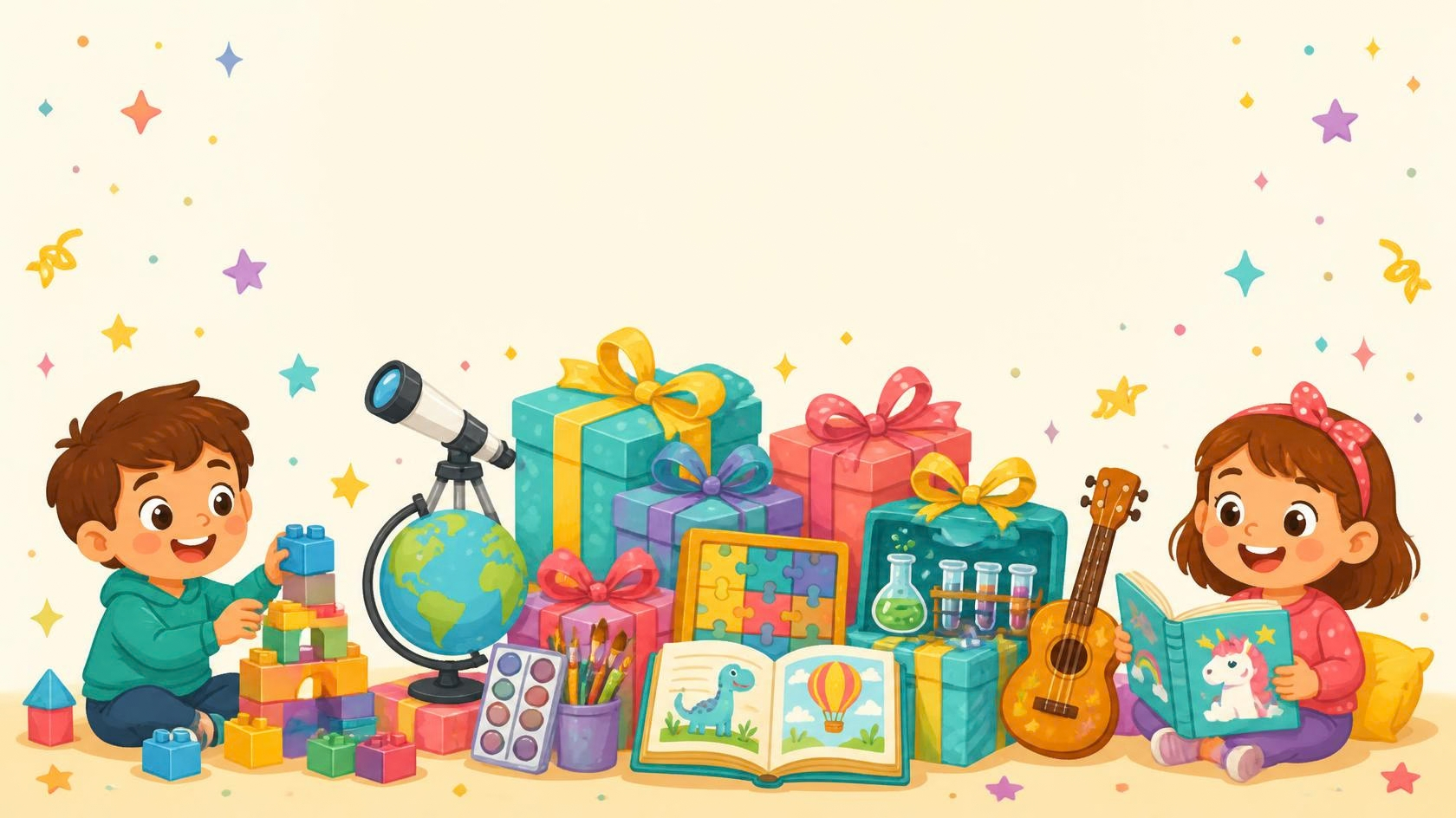
Here are 10 educational gifts for kids ages 4 to 8, grouped by skill: reading, math, science, and creativity. Each one is playful first and educational second, which is exactly why children keep coming back to them.
Quick Picks (If You’re Short on Time)
- Best for reading: BAMbingo Alphabet and Phonics Bingo Game
- Best for math: Montessori Learning Toys for 3 4 5 Year Old Gift, Number Counting Block Toy
- Best for science: Science Kit for Kids,80 Science Lab Experiments,Scientist Role Play
What Makes an Educational Gift Actually Fun?
The best educational gifts share three qualities. They let children make choices instead of only following instructions, they can be played at different levels as skills grow, and they invite play with a parent, sibling, or friend. If a child can play it alone, with someone else, and without a grown-up explaining the rules every time, it will probably stay in the toy rotation. Always check the age recommendation on the box so the challenge is neither too hard nor too easy.
Reading and Language Gifts
1. Phonics Board Game
Phonics games turn letter sounds into a race, a treasure hunt, or a matching challenge. Children practice blending sounds and reading simple words without feeling like they’re studying. Choose a game that lists the skills it covers, such as a phonics board game, so you can match it to your child’s level.
2. Magnetic Letters and Whiteboard
A set of magnetic letters on the fridge or a small whiteboard lets kids build their name, simple words, and silly sentences. It’s hands-on spelling practice that feels like play. Pair a magnetic letters set with a dry-erase board for double the fun.
3. Story Dice Game
Picture dice and story cards encourage children to invent their own stories, which builds vocabulary, sequencing, and speaking confidence. There are no wrong answers, which makes these games ideal for shy or reluctant storytellers. A story dice game for kids also fits easily in a backpack or travel bag.
Math Gifts
4. Counting and Number Board Game
Simple board games with dice build counting, number recognition, and basic addition naturally. Children learn to move spaces, count steps, and compare numbers while chasing the finish line. A counting board game for kids is a lovely family-night gift, too.
5. Pattern Blocks and Tangrams
Colorful shapes that fit together into pictures teach geometry, patterns, and spatial thinking. Start with picture cards that show the outlines, then challenge your child to design their own. A pattern blocks set with activity cards offers hours of low-pressure puzzle play.
6. Counting Bears and Sorting Set
Hands-on math tools help children see what numbers actually mean. Sorting by color, building patterns, and adding and subtracting with real objects make early math visible. A counting bears and sorting set is a great gift for the late-preschool to first-grade stage.
Science and Nature Gifts
7. Beginner Science Experiment Kit
Look for kits with simple, safe experiments such as growing crystals, making a fizzy volcano, or testing what sinks and floats. Children practice predicting, observing, and asking questions, the habits of every scientist. A beginner science experiment kit with clear picture instructions works best, and an adult nearby makes the experiments even better.
8. Nature Explorer Kit
A magnifying glass, a bug viewer, and a small notebook turn any backyard or park into a science lab. Kids look closely at leaves, insects, and rocks, then draw what they find. A kids’ nature explorer kit also encourages plenty of outdoor time.
Creativity and Thinking Gifts
9. Gear Building Set
Interlocking gears and chunky building pieces let children design simple machines and explore how things move. It’s early engineering disguised as play. Choose a kids’ gear building set with challenge cards that grow in difficulty so it keeps its appeal.
10. World Map Floor Puzzle
A large floor puzzle of the world teaches geography while children build it. Talk about the animals, oceans, and countries as you go, and keep the finished map as a conversation starter. A world map floor puzzle is a gift children often return to for years.
Choosing by Age
Ages 4 to 5: Choose gifts with big pieces, bright pictures, and simple rules. Phonics games, counting board games, and chunky puzzles are ideal because they build early skills without frustration.
Ages 6 to 7: Children can handle longer instructions and more complex challenges. Science kits, pattern blocks, and gear sets give them room to experiment and solve problems on their own.
Age 8: Look for gifts with layers of difficulty, such as strategy games, challenge cards, and larger puzzles, so the gift keeps their attention as their skills improve.
Tips for Making Educational Gifts Stick
Even the best gift can end up on a shelf if it isn’t introduced well. A few easy habits help:
- Play it together first. Ten minutes of shared play at the start shows your child how the game or kit works.
- Keep it visible. Toys on a low shelf get used far more than toys hidden in a closet.
- Rotate. Put half the games away for a month, then swap them. Old gifts feel new again.
- Follow the child’s lead. If they love the science kit and ignore the letters, follow their interest.
How to Match the Gift to the Child
Not sure which category to choose? Match the gift to your child’s favorite way of playing:
- The child who loves stories: reading and language gifts.
- The child who loves games: counting board games and pattern puzzles.
- The child who always asks “why?”: science and nature kits.
- The child who loves building: gear and construction sets.
When in doubt, choose something the child can enjoy together with a parent. Shared play multiplies the learning and creates the kind of memories everyone remembers.
Easy Educational Gift Bundles
Bundles make a modest gift feel generous. Try pairing a counting game with a set of counting bears, magnetic letters with a small whiteboard, or a science kit with a magnifying glass and notebook. Add a bookmark or a handwritten note and wrap everything together. Bundles also make it easy to build a theme around a child’s current obsession, whether that’s dinosaurs, space, or the garden.
Final Thoughts
The best educational gifts don’t announce themselves as lessons. They invite curiosity, reward effort, and make learning feel like play. Pick one from this list, add a handwritten note, and let the fun do the teaching. For more inspiration, see our guide to the best books to give as gifts, and check back soon for more ideas from the Sparkleland Team.