Disclosure: This post contains affiliate links. As an Amazon Associate, Sparkleland earns from qualifying purchases, at no extra cost to you. We only recommend products we think families will genuinely use.
Learning letters and sounds is the first big step on the road to reading, and it doesn’t need flashcard drills or long sessions at the table. Young children learn best through play, movement, and short, cheerful practice.
These 10 phonics activities for kids ages 3 to 6 use everyday items and take just a few minutes to set up. Try one or two a day and watch your child’s confidence grow.
Quick Picks (If You’re Short on Time)
- Best for hands-on play: Curious Columbus Magnetic Letters and Numbers Fridge Magnets For Toddlers
- Best for games: BAMBingo Alphabet and Phonics Bingo Game
- Best for writing practice: Magnetic Letter Tracing Board
A Quick Note on Letter Sounds
Letter names (“ay,” “bee,” “see”) and letter sounds (“a,” “b,” “k”) are different, and it’s the sounds that help children read words. Many phonics programs start with a small group of common sounds, such as s, a, t, i, p, and n, because those letters make lots of simple words. Introduce just a few at a time, and keep each practice session short, around five to ten minutes. Short and happy beats long and tiring.
Active Sound Games
1. Sound Hunt
Choose a sound, say /s/, and send your child around the house to find objects that start with it: sock, spoon, soap. Bring them to a tray and say each word together, stretching out the first sound. It’s a movement game that trains careful listening. For an extra challenge, ask for objects that end with the sound.
2. Letter Fishing
Write letters on paper fish and clip a paper clip to each one. Let your child “fish” with a magnet on a string, then say the letter’s sound and a word that starts with it. A ready-made [LINK: magnetic alphabet fishing game] works just as well and is easy to pack for trips.
3. Beginning Sound Bingo
Make a simple bingo card with pictures such as a cat, sun, and dog, and call out sounds instead of words. Children cover the picture that starts with the sound you call. Use paper squares as markers, and keep small objects away from children who still put things in their mouths.
Hands-On Letter Activities
4. Salt or Sand Tray Writing
Pour a thin layer of salt, sand, or rice into a shallow tray. Say a letter’s sound and let your child trace the letter with one finger. The feel of the shape helps memory, and a quick shake erases the page for another turn. A sand tray with lid is a mess-free alternative.
5. Play Dough Letters
Roll play dough snakes and shape them into letters, or press letter cutters into the dough. Say the sound each time a letter is finished. It builds hand strength for writing as well as letter knowledge. A play dough set with letter cutters makes this activity even easier.
6. Magnetic Letter Building
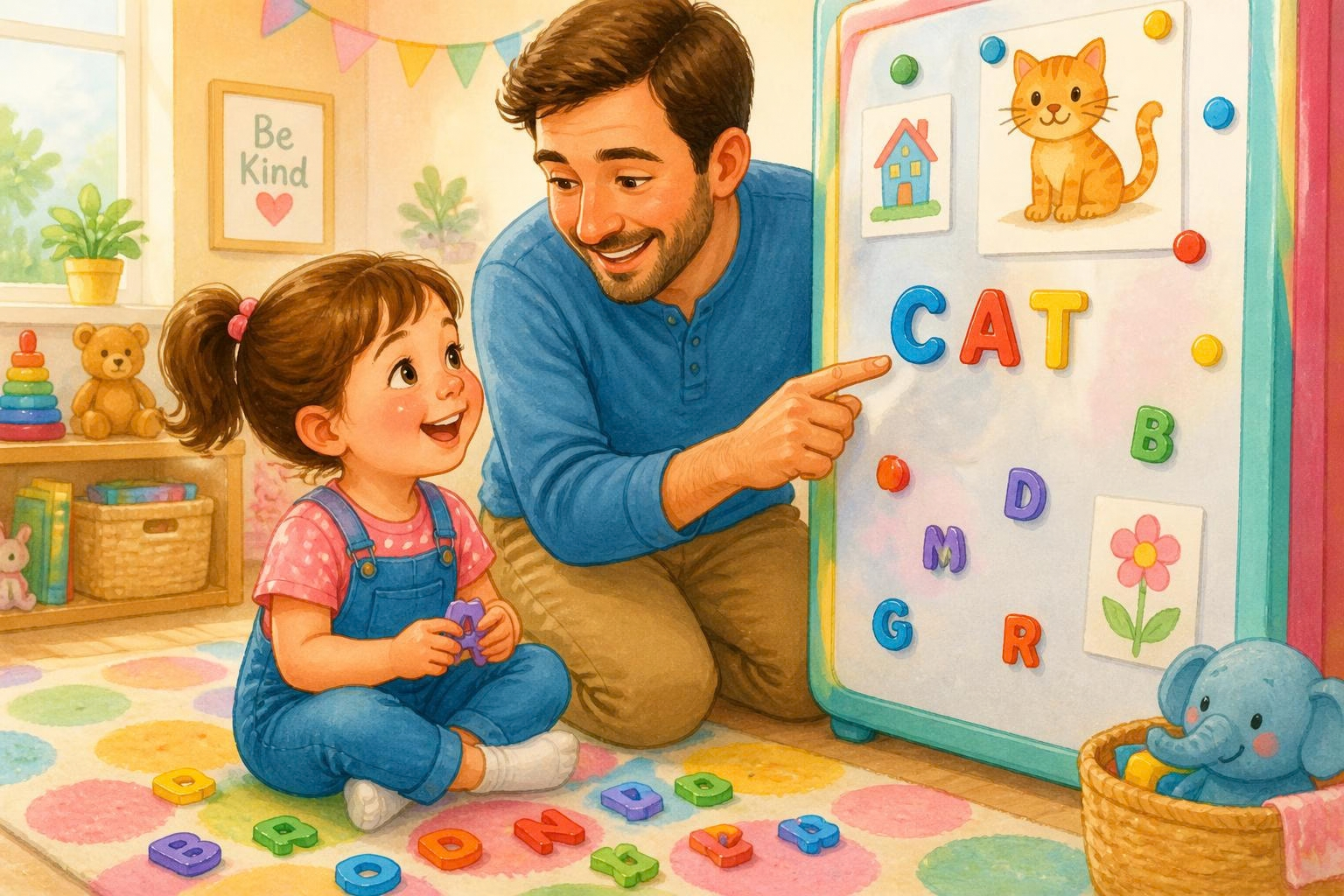
Put a few magnetic letters on the fridge and build simple words together, such as sat, pin, and tap. Slide through the sounds slowly, then blend them: s-a-t… sat! A magnetic letters set paired with a small whiteboard doubles as a writing station.
Listening and Language Games
7. Rhyming Games
Ask, “What rhymes with cat?” Silly answers count! Rhyming helps children hear the endings of words, which is an important pre-reading skill. Rhyming picture books such as Winter is…An Early Reader Book for Toddlers and Kids are a gentle way to practice during storytime.
8. Phonics Board Game
Board games turn practice into a treat. Children move along the path, say the sound or word on each space, and earn a turn. Choose a game that lists the sounds it covers, such as BAMBingo Alphabet and Phonics Bingo Game , and play for ten minutes after dinner.
9. Alphabet Puzzles and Books
Alphabet floor puzzles pair each letter with a picture, which helps children link sounds to words. At bedtime, read an alphabet book together, point to each letter, say its sound, and let your child name the picture. Try The Learning Journey: Jumbo Floor Puzzle for playtime and First Little Readers Parent Pack for read-aloud time.
10. Whiteboard Word Building
For children who are ready for more, write three-letter words with a missing letter, such as _at, p_n, and s_p. Let your child choose the missing letter and read the word aloud. The Scribbledo 9X12 Magnetic Dry Erase Board for Kids with colored markers keeps it fun and makes mistakes easy to fix.
A Simple 10-Minute Daily Plan
- Minutes 1–3: a sound hunt or rhyming game to warm up listening skills.
- Minutes 4–7: one hands-on activity, such as play dough letters or tray writing.
- Minutes 8–10: read a short story together and point out a few letters and sounds.
Repeat favorites often. Children love familiar games, and repetition is how sounds become automatic.
Tips for Success
- Keep it playful. If your child is tired or upset, stop and try again tomorrow.
- Celebrate effort, not just correct answers.
- Practice the sound a letter makes before spending time on its name.
- Mix movement with quiet activities so children stay engaged.
A Sample Week of Phonics Play
- Monday: sound hunt around the house.
- Tuesday: play dough letters.
- Wednesday: rhyming game in the car or at the table.
- Thursday: phonics board game after dinner.
- Friday: magnetic letter word building, then a bedtime story.
Weekends can be a rest from practice, or a chance to revisit your child’s favorite game.
Common Questions From Parents
When should my child start learning letter sounds?
Many children show interest between ages 3 and 4, but every child is different. Follow your child’s curiosity, keep it playful, and don’t worry if they’re not ready yet. Reading aloud and rhyming games build the foundation in the meantime.
What if my child mixes up letters like b and d?
This is very common in young children. Use a picture cue, such as a bat and a ball for b, and give them plenty of time. Tracing letters in a sand tray also helps because the hand remembers the shape.
Do I need a special program?
No. Regular, friendly practice with simple materials works very well. If you’d like extra structure, many parents add a workbook or game alongside the activities above, but it isn’t essential.
Books That Support Phonics at Home
Books and activities work best together. Choose rhyming picture books, alphabet books, and simple stories with repeated words, then point to the letters as you read. Let your child “read” familiar lines aloud, and pause so they can fill in rhymes.
Final Thoughts
You don’t need special training to help your child start reading. A few minutes of play each day, lots of encouragement, and a handful of simple supplies are enough to build a strong foundation. Pick two activities from this list to try this week, and let us know in the comments which one your child loves most. Check back soon for more learning ideas from the Sparkleland Team.