
Disclosure: This post contains affiliate links. As an Amazon Associate, Sparkleland Kids earns from qualifying purchases, at no extra cost to you. We only recommend products we think families will genuinely use.
It’s pouring, the park is off the table, and your little one has just announced they’re bored. Sound familiar? Rainy days with young children can feel endless, but they don’t have to end with everyone glued to a tablet. With a few simple supplies and a bit of imagination, a gray afternoon can become the best part of the week.
Below are 15 screen-free activities for kids ages 3 to 7. Each one takes about five minutes to set up, uses things you probably already own, and works for one child or a whole group of siblings. At the end, you’ll find a rainy-day kit checklist so you’re ready before the next storm arrives.

Five Creative Activities
1. Painter’s Tape Roads
Stick painter’s tape on the floor to make roads, a hopscotch grid, or a winding river. Add toy cars or small animals and let the stories begin. The tape peels off cleanly when playtime is over, so cleanup is easy too.
2. Play Dough Bakery
Roll out some play dough and open a pretend bakery or pizza shop. Add cookie cutters, a rolling pin, and plastic knives for little hands. Squeezing and rolling also builds the finger strength children need for writing later. A starter set of play dough with tools keeps everything together in one tub.
3. Washable Marker Mural
Tape a big sheet of paper to the table or wall and invite everyone to draw one giant picture together: a jungle, an ocean, or a city. Washable markers keep the stress level low, and a pack of JUPITEARTH Washable Dual Tip Markers is always worth having in the cabinet.
4. Craft Kit Afternoon
Keep one ready-made craft kit hidden away for emergencies. Suncatchers, bead sets, and paint-your-own figures all come with everything included, so there’s no hunting for glue. Look for age-labeled kits such as Arts and Crafts Supplies to avoid frustration.
5. Sticker Scene Stories
Hand over a sticker book or blank paper and a sheet of stickers, then ask your child to tell you the story of the scene they create. It’s calm, creative, and a lovely way to build vocabulary. A reusable sticker book can be used again and again, which makes it perfect for car rides and waiting rooms too.
Five Active Activities to Burn Off Energy
1. Living Room Obstacle Course
Use cushions to climb over, a blanket to crawl under, and tape lines to walk like a tightrope. Time each run and cheer for every attempt. Rearranging the course halfway through keeps it fresh for another half hour.
2. Balloon Keep-Up
Challenge your child to keep a balloon off the floor using only hands, then only elbows, then only knees. Balloons move slowly, so they’re safe indoors and easy for younger children to follow. Count the hits together to practice numbers.
3. Animal Walk Race
Call out an animal and have everyone move like it: bear crawl, frog jump, crab walk, or slithering snake. It’s silly, it’s great exercise, and it needs zero equipment. Let your child be the leader and choose the next animal.
4. Freeze Dance
Play favorite songs and dance wildly, then pause the music and freeze like statues. Add challenges such as freezing on one leg or freezing like a flower. For extra fun, invent a dance for your favorite storybook characters.
5. Sock-Ball Toss
Roll pairs of clean socks into balls and toss them into a laundry basket, a bucket, or a box. Step back one pace after every successful throw. It’s a gentle way to practice aim and counting without anything breakable in sight.
Five Calm and Cozy Activities
1. Blanket Fort Reading Nook
Drape blankets over chairs, add pillows, and hand out flashlights. Then fill the fort with picture books and read together while the rain taps outside. Tuck in a few favorites, including Who Pooped on Me, and add a kids’ clip-on book light for a cozy glow.

2. Floor Puzzle Challenge
Large floor puzzles with chunky pieces are ideal for ages 3 to 7 and can keep a child busy for a surprisingly long stretch. Start by sorting the edge pieces from the middle ones, then work as a team. A 48-piece floor puzzle suits younger children, while confident puzzlers will enjoy 100 pieces or more.
3. Build a House for a Rain-Scared Toy
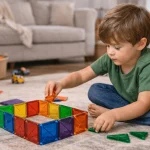
Give your child blocks or magnetic tiles and a challenge: build a shelter that will keep a toy dry. Talk about which shapes make strong walls and sturdy roofs. Open-ended building toys such as FNJO Magnetic Tiles grow with your child for years.
4. Sensory Bin
Fill a shallow tub with dry rice, pasta, or oats and add scoops, cups, and small toys to find and bury. Scooping and pouring are deeply absorbing for young children. Always supervise closely, and skip small items for any child who still puts things in their mouth.
5. Indoor Treasure Hunt
Hide ten small items around the house and give your child a picture list or simple rhyming clues. Younger children can check off pictures, while older ones can read the clues aloud. Swap roles and let them hide treasures for you next.
Your Rainy-Day Kit Checklist
The secret to calm rainy days is preparation. Fill one box or bag and keep it somewhere handy, so you’re never scrambling. A good starter kit includes:
- Washable markers and a pad of paper
- A play dough set and a few cookie cutters
- One unopened craft kit (your emergency back-up)
- A sticker book for quiet moments
- A floor puzzle or magnetic building tiles
- Painter’s tape, balloons, and a few books for fort time
Rotate the contents every few weeks. Even old favorites feel brand new after a short break.
Quick Tips for Rainy-Day Success
A few small habits make these activities work even better:
- Start active, then go calm. Burn off energy first with an obstacle course or freeze dance, then move to puzzles, crafts, or stories.
- Let your child choose. Offer two or three options and let them pick, which cuts down on complaints.
- Use a timer. Twenty minutes per activity keeps things fresh, and a visible countdown helps children move on without a fuss.
- Make cleanup part of the game. Race to put the markers away or see who can tidy the most blocks in one minute.
Final Thoughts
Rainy days don’t have to mean screen time. With a little planning, they can become the days your child remembers most: the blanket forts, the giant drawings, the laughter. Pick two or three activities to try this week, stock a rainy-day kit, and let the weather do its worst.
Which activity will you try first? Share your family’s favorite in the comments, and check back soon for more simple ideas from the Sparkleland Team.